
The method
Proven sports performance training, applied to Karate's unique demands.
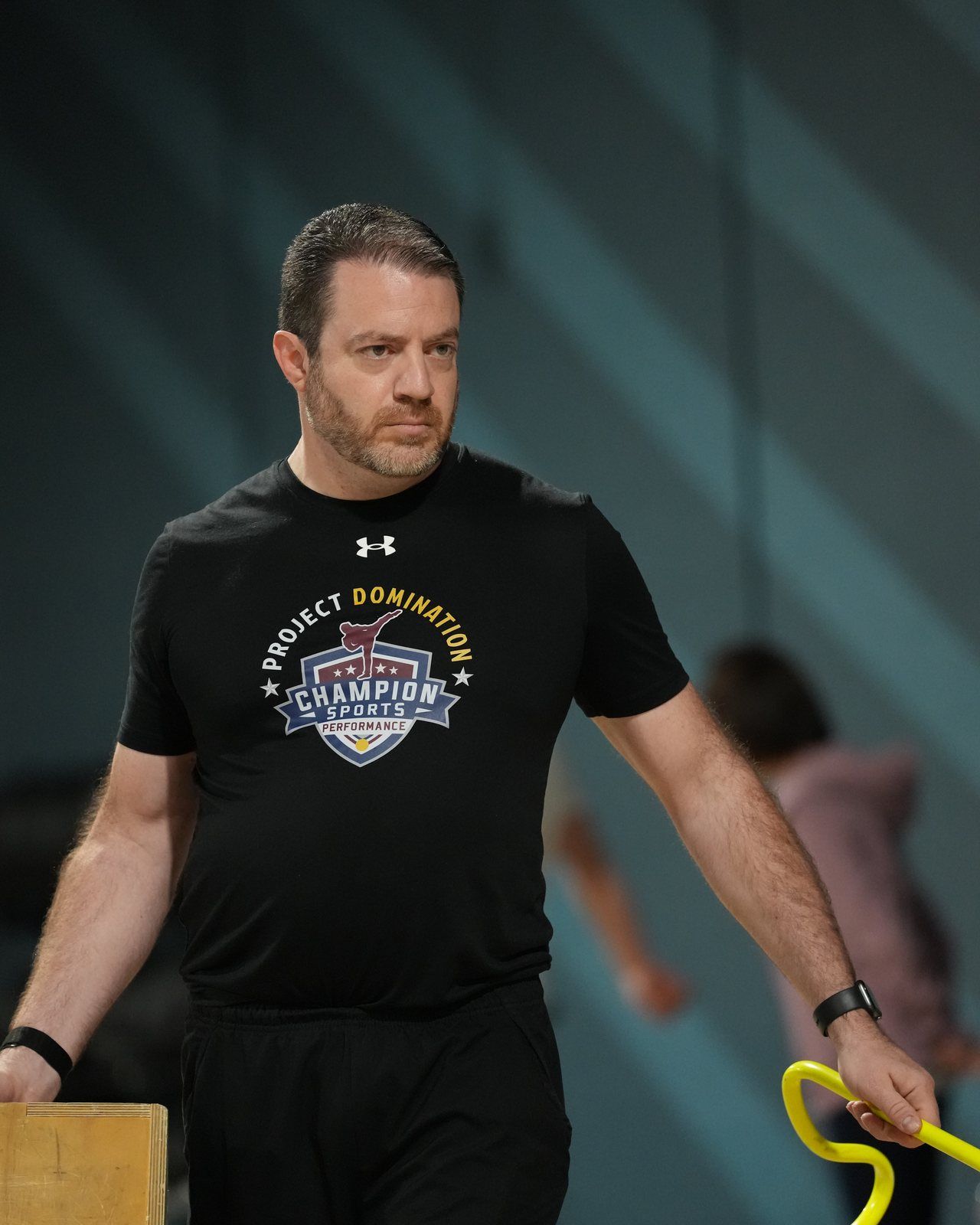
The Champion Sports Performance method is a sports performance and strength and conditioning system built for Karate athletes by Coach Chris Stratis, USA Karate's Head Coach for Sports Performance. It trains the five pillars of Karate athleticism (strength, speed, power, stamina and work capacity, and recovery) and the preparation habits behind them (mindset and mental skills, nutrition, and hydration). Athletes start with the Domination Index and are retested every 2 to 3 months.
The framework
The five pillars of Karate athleticism.
Strength, speed, power, stamina and work capacity, and recovery, plus the preparation habits that decide how much each session gives you.
Each one raises specific categories in your Domination Index. Every category in your Index has a place in your plan.
Pillar
Strength
Force you can use in competition.
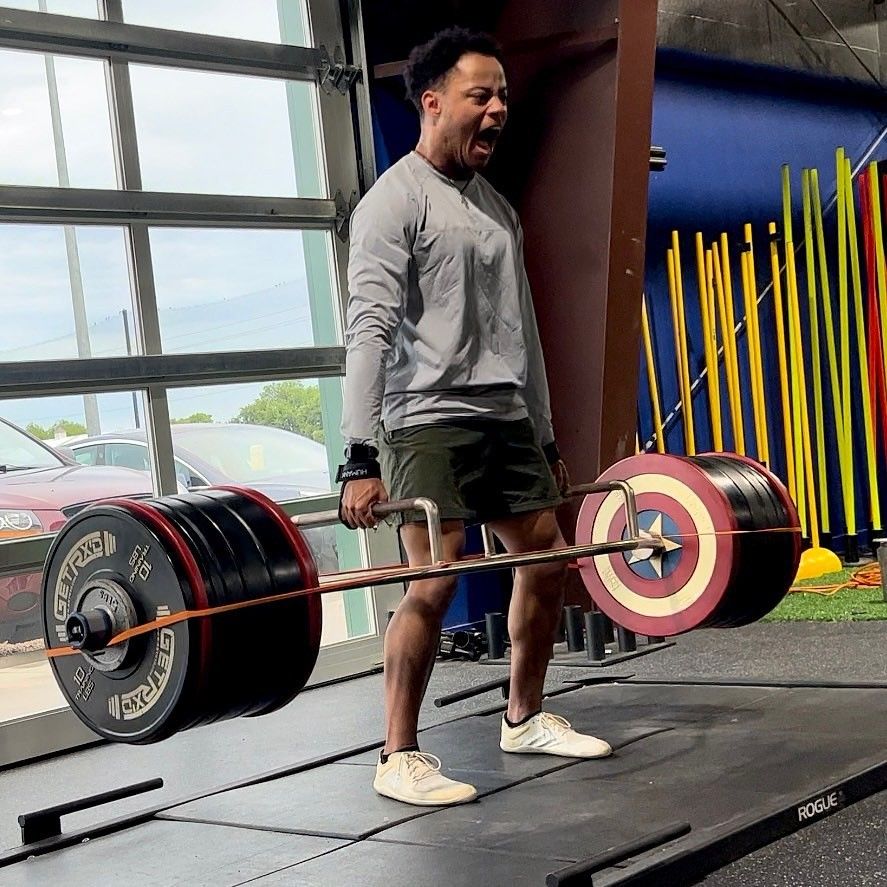
The strength movements that let you express power and hand speed, kick with force, hold strong and stable stances, and stop and change direction precisely.
Strength is the base the other pillars build on. In Kumite it shows up as the ability to control and outmaneuver an opponent, and as the force behind a punch or kick that has to score cleanly.
In Kata it keeps low stances stable and transitions controlled, so every technique stays crisp from the first movement to the last. Core and rotational strength links the two, carrying force from the floor through the hips into the technique.
- Raises
- 1Upper Body Strength2Lower Body Strength3Core & Rotational Strength
Pillar
Speed
Faster entries. Sharper technique.
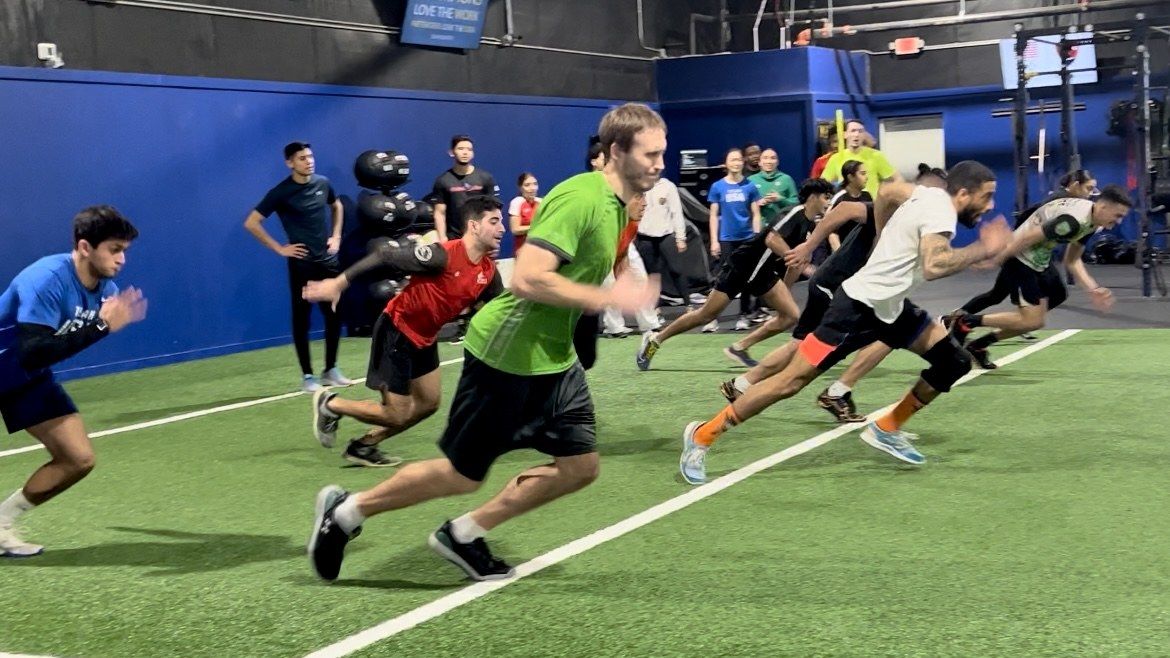
Speed development for acceleration, getting to scoring distance first in Kumite, speed and snap in every Kata technique, and fast, precise movement forward, backward, and laterally.
Kumite rewards the athlete who arrives first: closing the distance, scoring, and getting back out before the counter. Kata rewards speed and snap on every technique and sharp, controlled changes of direction.
Both depend on accelerating from a standstill and moving precisely in every direction, not only straight ahead.
- Raises
- 4Speed & Movement
Pillar
Power
Explosive when it counts.
Power training for explosive punches, kicks, sweeps, and takedowns in Kumite, and for the speed, snap, and kime that make every Kata technique decisive.
Power is strength applied fast. A Karate technique lasts a fraction of a second, so the force an athlete can produce in that window matters more than the most they can produce slowly.
- Expressed across
- 1Upper Body Strength2Lower Body Strength3Core & Rotational Strength4Speed & Movement

Pillar
Stamina and work capacity
Still sharp at the end.
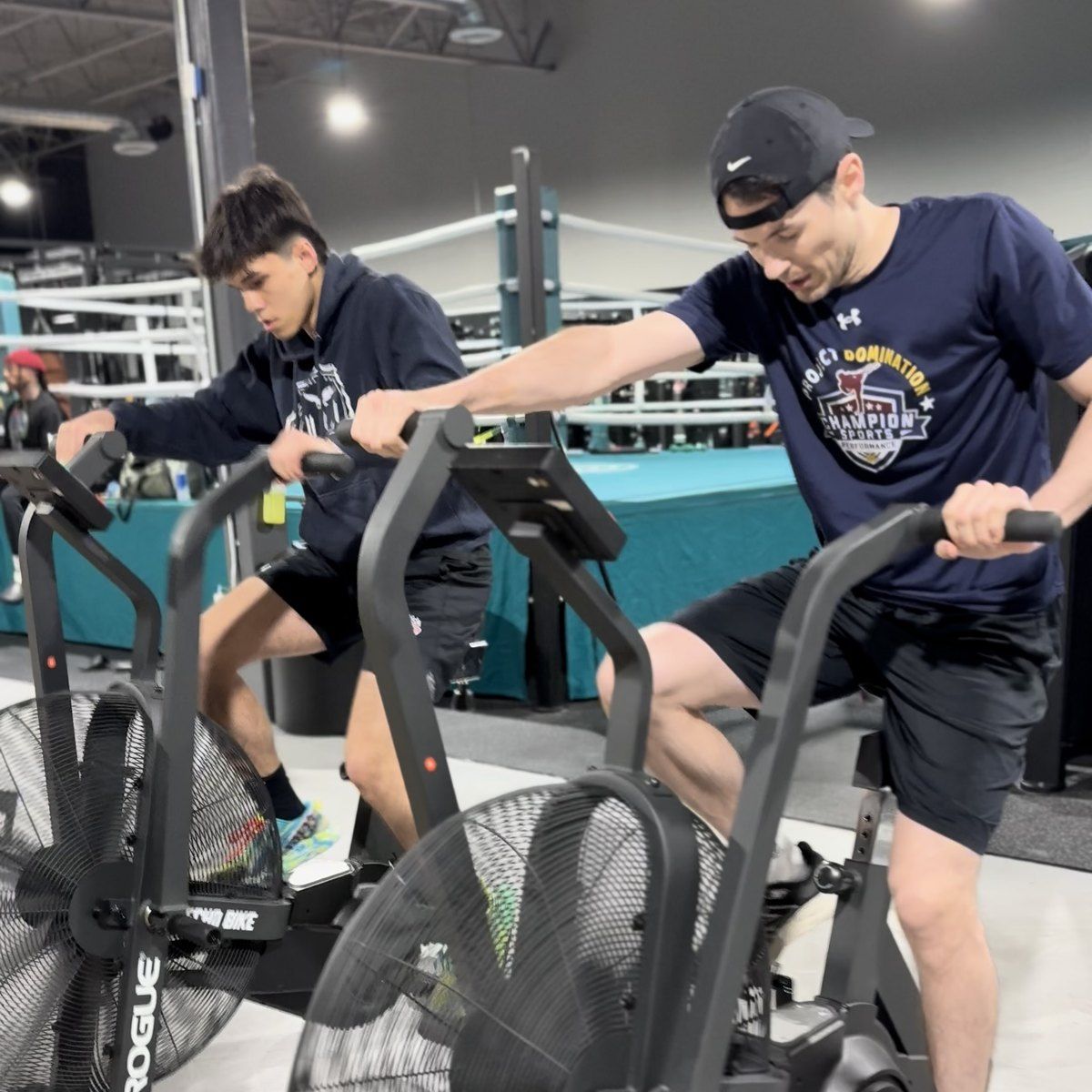
Conditioning for repeated high-intensity exchanges and multiple matches in a day, and for control through the final round, so you are still sharp at the end.
A tournament day can mean several matches or several rounds of Kata, often with long waits in between. Kumite asks for repeated high-intensity exchanges with short recoveries; Kata asks for the same power and control in the final round as in the first.
Work capacity is what lets technique hold up when fatigue sets in.
- Raises
- 5Conditioning
Pillar
Recovery
Built into every plan, not left to chance.
Planned rest days, lower-volume training weeks heading into competition, and readiness check-ins such as sleep, so training turns into performance and you arrive at competition fresh rather than flat. Training that helps minimize your risk of injury, so you can compete consistently without setbacks.
Training only turns into performance when the body has time to adapt. Rest and readiness check-ins help Kata and Kumite athletes arrive at the next session, and the next competition, ready to perform.
Recovery also protects the long run: training that helps minimize your risk of injury keeps you competing instead of sitting out.
- Raises
- 9Recovery
Behind the pillars
Preparation habits
The habits that decide how much each session gives you.
Mindset and mental skills, nutrition, and hydration. The Domination Index measures these habits, and readiness check-ins before each session track sleep, stress, soreness, mood, and energy. In Project Domination, Coach Stratis, a Certified Sports Nutrition Coach, can guide them based on your individual needs.
What an athlete brings to the mat depends on more than the session itself. A Kumite athlete managing a weight class and a Kata athlete performing late in the day both rely on how they have fueled, hydrated, and prepared mentally.
These habits sit in the Domination Index beside the physical categories, so they are trained with the same intent.
- Raises
- 6Mindset & Mental Skills7Nutrition8Hydration
Coach Stratis has helped me understand what it means to be an all-around athlete. Prior to Champion Sports Performance, I worked really hard during karate practice, but when I left the dojo, I wasn't doing everything possible to achieve my goals. He showed me the importance of proper sleep and nutrition, as well as supplemental speed, strength, and conditioning. It was surprising how large a role these factors play in performance and how important it is to have a plan that encompasses them.
Pillars to Index
See which categories each pillar raises.
Sample Domination Index
Illustrative sample
6.6/10
Silver
Overall index
Illustrative sample, not a real athlete. Dashed line: first Index.
Tap a pillar to see what it trains
Force you can use in competition.
The strength movements that let you express power and hand speed, kick with force, hold strong and stable stances, and stop and change direction precisely.
- Raises
- 1Upper Body Strength2Lower Body Strength3Core & Rotational Strength
Faster entries. Sharper technique.
Speed development for acceleration, getting to scoring distance first in Kumite, speed and snap in every Kata technique, and fast, precise movement forward, backward, and laterally.
- Raises
- 4Speed & Movement
Explosive when it counts.
Power training for explosive punches, kicks, sweeps, and takedowns in Kumite, and for the speed, snap, and kime that make every Kata technique decisive.
- Expressed across
- 1Upper Body Strength2Lower Body Strength3Core & Rotational Strength4Speed & Movement
Still sharp at the end.
Conditioning for repeated high-intensity exchanges and multiple matches in a day, and for control through the final round, so you are still sharp at the end.
- Raises
- 5Conditioning
Built into every plan, not left to chance.
Planned rest days, lower-volume training weeks heading into competition, and readiness check-ins such as sleep, so training turns into performance and you arrive at competition fresh rather than flat. Training that helps minimize your risk of injury, so you can compete consistently without setbacks.
- Raises
- 9Recovery
The habits that decide how much each session gives you.
Mindset and mental skills, nutrition, and hydration. The Domination Index measures these habits, and readiness check-ins before each session track sleep, stress, soreness, mood, and energy. In Project Domination, Coach Stratis, a Certified Sports Nutrition Coach, can guide them based on your individual needs.
- Raises
- 6Mindset & Mental Skills7Nutrition8Hydration
Every category in your Index has a place in your plan.
Proof of the method
Measured, not guessed.
Athletes are retested every 2 to 3 months, so progress is measured, not guessed. The assessments test acceleration, top speed, strength, explosive power, and agility.
Example 8-week training block
The average athlete, 8 weeks later.
Average improvements for athletes coached by Coach Stratis in one example 8-week training block.
Power
+13.9%
Standing broad jump
Strength
+81%
Max push-ups
Week 1
Week 8
Strength
+41%
Deadlift 3-rep max
Week 1
Week 8
Speed
+13.7%10-yard sprint
Week 1still behind
Week 8
+19%T-agility test
+14.2%
Average overall gain across all categories in the same 8-week block.
6-month training period
Over six months.
Average improvements for athletes coached by Coach Stratis over a 6-month training period.
+12%
Explosive speed
+15%
Speed endurance
Consistency
Train all year, not in bursts.
The best plan only works if you show up for it.
Athletes who train consistently through the year keep building on their progress and get hurt less often. Athletes who train hard only in the summer keep starting over.
Read more: Consistency: The Overlooked Key to Help Athletes Reach Their Potential
Get the most from every session.
The method is what you train. The Champion's Code and the Progress Pyramid are how Coach Stratis asks athletes to approach each session.
The Champion's Code
- 1Embrace the opportunity to train.
- 2Be respectful.
- 3Come prepared to train.
- 4Give your best, every time.
- 5Commit to the process.
- 6Have fun.
Questions
What is the Champion Sports Performance method?
It is a sports performance and strength and conditioning system built for Karate athletes. It trains the five pillars of Karate athleticism (strength, speed, power, stamina and work capacity, and recovery) and the preparation habits behind them (mindset and mental skills, nutrition, and hydration). Athletes start with the Domination Index and are retested every 2 to 3 months.
How is progress measured?
Athletes are retested every 2 to 3 months, so progress is measured, not guessed. The assessments test acceleration, top speed, strength, explosive power, and agility, and a Domination Index retake shows which categories moved. In one example 8-week training block, athletes coached by Coach Stratis averaged 14.2% gains across all categories.
Does it replace dojo training?
No. The method builds the athlete around the technique you already train in the dojo. Sessions are built to fit alongside skills training, not compete with it, and your plan accounts for your dojo schedule, your competition calendar, and the equipment you have.
Who designed it?
Coach Chris Stratis, USA Karate's Head Coach for Sports Performance. He has coached athletes for more than 25 years, is the sole sports performance coach for Olympians Tom Scott and Brian Irr, and created USA Karate's Sports Performance for Karate coach certification program.
Find your biggest opportunities to improve.
The Domination Index is free, takes a few minutes, and tells you which part of your preparation is costing you the most.